Winter Freeze Protection for Backflow Preventers in Ontario: Essential Tips to Avoid Costly Damage
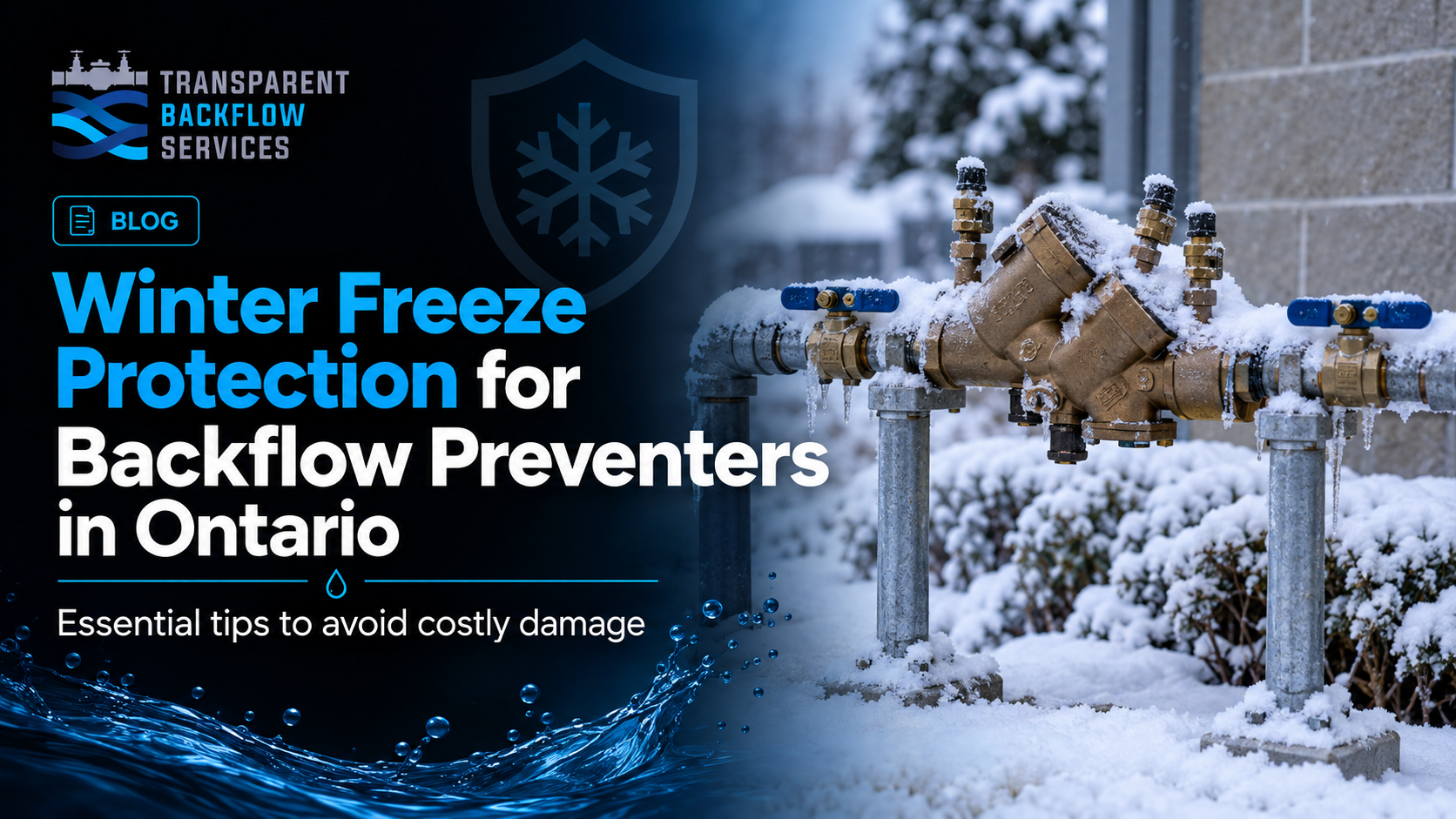
Winter preparation can raise plenty of questions. Is an insulated cover enough? Does winterizing an irrigation system with compressed air protect the backflow preventer as well? What should you do if the device has already frozen?
Darryl Schwindt is a plumber with over 20 years of plumbing experience, a backflow prevention specialist, and the owner and operator of Transparent Backflow Services. Based in Waterloo and serving Southern Ontario, he focuses on backflow testing, cross-connection surveys, repairs, and installations—helping property owners protect their drinking water systems and understand their maintenance responsibilities.
In the following Q&A, Darryl explains what property owners should know about freeze protection, the differences between seasonal and year-round systems, and how to prepare before temperatures drop.
Why can a backflow preventer crack in freezing weather?
Interviewer: These devices look substantial. What makes them vulnerable?
Darryl: The problem is water trapped inside. As it freezes, it expands and can damage the assembly, its isolation valves, or its internal components. Even a small amount of trapped water can be enough, and the damage often isn’t obvious until the water is turned back on.
When should I winterize my backflow preventer in Ontario?
Interviewer: Should people wait until the first snowfall?
Darryl: No. Plan around freezing temperatures, not snow. An exposed assembly may be at risk before winter looks like winter. Overnight lows in Ontario can drop below freezing well before the first snowfall, so autumn is the time to book.
For a seasonal irrigation system, arrange winterization before freezing weather arrives. For equipment operating year-round, check its protection before cold conditions put it to the test.
No single date suits every Ontario property. Exposure, equipment location, and the forecast all matter. Booking ahead also gives you time to address an unsuitable installation or a heater that is not working.
Is an insulated backflow cover enough?
Interviewer: Can I just put an insulated bag over the device?
Darryl: Insulation slows heat loss; it does not generate heat. A cover alone should not be assumed to protect water-filled equipment through prolonged freezing conditions.
For an assembly that must remain operational, the solution may involve an appropriately selected heated enclosure. Its suitability depends on the installation and expected conditions.
Maintenance access and drainage also matter. Purpose-built backflow enclosures can incorporate insulation, heating, and drain openings. Choose protection for the equipment rather than wrapping it in whatever is available.
Does an irrigation system blowout winterize the backflow preventer too?
Interviewer: If an irrigation contractor has blown out the lines, is everything protected?
Darryl: Ask whether the backflow assembly was winterized as well. Clearing downstream of the irrigation piping and draining the backflow preventer are separate parts of the job.
When booking, ask: “Does this include winterizing the backflow preventer according to its manufacturer’s instructions?” That question clarifies the scope.
Also remember, if the backflow device is disassembled for winterization, it must be tested in the spring to confirm it is operating correctly before it goes back into service.
Can I drain the backflow device myself?
Interviewer: Plenty of videos online show which valves to operate and how to drain the device. Are they reliable?
Darryl: Not really. Have a qualified technician winterize the backflow device. Most devices will not drain by simply isolating them and opening their test ports. The best way to winterize a backflow device is to have it removed in the fall, kept indoors over the winter, and reinstalled in the spring using unions. Another option is disassembling the backflow and removing its check valves, diaphragm, spacer, and other delicate parts so they are not damaged by freezing. With either method, the device must be tested after it is reinstalled.
Can an indoor backflow preventer freeze?
Interviewer: Is being inside enough protection?
Darryl: Only if its surroundings remain warm enough. An unheated room or a loss of building heat can leave indoor plumbing exposed to freezing conditions.
For commercial properties, include device locations during your winter building inspections. Consider what happens overnight, during holiday closures, or after a heating failure.
Flow and water sensors can alert you to issues on equipment, including vulnerable indoor plumbing, but they still need an appropriate connection and someone ready to respond. An alert does not heat the device or fix the problem.
What should I do if my backflow preventer has frozen?
Interviewer: Can I thaw it and turn the water back on?
Darryl: Have it assessed before assuming it is safe to return to service. Cracks can become apparent when ice thaws and water begins escaping.
Do not use a blowtorch or open flame, and do not force frozen valves. If there is an active leak, isolate the affected supply only if you can safely identify it and doing so will not compromise fire protection.
Contact a qualified contractor. The assessment should establish what was damaged, whether repair is appropriate, and what testing is needed afterward.
Does winterization replace annual backflow testing?
Interviewer: If the assembly was serviced in autumn, does it still need testing?
Darryl: Winterization protects against freezing. Testing checks whether the assembly provides the required backflow protection.
Waterloo requires testable backflow prevention devices to be tested each year. Keep the municipal testing schedule separate from seasonal maintenance, and confirm any testing needed after repairs, commissioning, or other work.
At spring startup, review the device’s condition before restoring service. A maintenance record should show what was done, when it happened, and whether follow-up work remains.
What is the most useful step a property owner can take now?
Darryl: Identify your device before a problem occurs. Record its model, location, and the system it serves. Find the previous test report and establish who is responsible for winter preparation.
If you need help, send Transparent Backflow Services those details and a clear photo. We can discuss your concerns and the appropriate next step.
Explore our backflow services in Cambridge, Waterloo, Kitchener, Guelph, and Southern Ontario, or request an estimate for your property.