What Is Backflow and Why Does It Pose a Serious Threat to Safe Drinking Water?
Most people turn on a tap without thinking twice about where the water has been.
They expect it to flow in one direction: from the municipal water supply, through the plumbing system, and out of the faucet as clean, safe drinking water.
Backflow occurs when the direction changes.
Instead of water continuing safely toward a sink, fixture, appliance, irrigation system, or commercial process, it begins moving backward. When that happens, non-potable water, chemicals, pesticides, bacteria, or other contaminants can be pulled or pushed into the drinking water system.
This is why backflow prevention is such an important part of protecting public water supplies.
A backflow event may begin inside a single building, but the consequences can extend beyond that property. Without the right protection in place, contamination can potentially reach employees, customers, tenants, neighbours, and other users connected to the same water system.
What Is Backflow?
Backflow is the unwanted reversal of water through a plumbing or fire system.
Under normal conditions, water pressure keeps clean water moving from the municipal supply into a home, commercial building, industrial facility, or institutional property.
If pressure conditions change, water can begin flowing in the opposite direction.
The concern is not simply that water is moving backward. The real concern is what that water may contain.
A hose may be sitting in a bucket of cleaning solution. An irrigation line may contain soil, fertilizer, or stagnant water. A boiler system may contain treatment chemicals. A commercial facility may have equipment connected to substances that should never come into contact with drinking water.
When a cross-connection exists between the potable water supply and a possible source of contamination, backflow can create a direct route for those substances to enter the drinking water system.
The Two Main Causes of Backflow
Backflow generally occurs through one of two mechanisms:
Back-siphonage
Back-pressure
Understanding the difference helps explain why backflow prevention devices must be selected, installed, tested, and maintained correctly.
Back-Siphonage: When Contaminants Are Pulled Into the Water Supply
Back-siphonage occurs when pressure in the water supply drops low enough to create a vacuum-like effect.
It works much like drinking through a straw. When pressure is reduced on one side, liquid can be pulled toward the lower-pressure area.
A drop in municipal water pressure can happen for several reasons, including:
A water main break
Fire hydrant use
Water main flushing
A major increase in water demand
A temporary interruption to the water supply
If a hose, pipe, or fixture is connected to a non-potable liquid at the same time, that liquid can be drawn backward into the drinking water system.
A simple example is a garden hose left submerged in a container of fertilizer or cleaning solution. If water pressure suddenly drops and there is no working backflow preventer, the contents of that container may be pulled into the potable water line.
Back-Pressure: When Private-System Pressure Overpowers the Supply
Back-pressure occurs when the pressure inside a private plumbing system exceeds that of the municipal water supply.
Instead of contaminants being pulled backward, they are pushed backward.
This can happen in systems involving:
Boilers
Booster pumps
Elevated piping
Pressurized tanks
Fire suppression systems
Industrial or commercial equipment
If the downstream system contains non-potable water or chemicals, the higher pressure can force those substances back toward the drinking water supply.
This is why backflow prevention is not only a concern for large industrial sites. Any property with the right combination of pressure, plumbing connections, and potential contaminants can be at risk.
Why Backflow Is a Serious Drinking Water Concern
Backflow can affect the taste, colour, or smell of water, but the biggest concern is that contamination may not always be obvious.
Some contaminants may be visible. Others may not have a noticeable colour, taste, or odour.
Depending on the source, a backflow event may introduce:
Cleaning chemicals
Fertilizers and pesticides
Boiler treatment chemicals
Bacteria and other microorganisms
Stagnant water
Industrial fluids
Water from irrigation or fire protection systems
The level of risk depends on the contaminant, the amount that enters the system, how long the problem goes unnoticed, and whether a properly functioning backflow prevention device is in place.
A small plumbing connection can create a much larger public health issue when the potable water supply is not adequately protected.
Real Backflow Incidents Show the Risk Is Not Theoretical
Backflow is sometimes treated as a technical plumbing issue that is unlikely to affect real people.
History shows otherwise.
In one well-known incident in Norfolk, Virginia, customers at a fast-food restaurant complained that their drinks tasted salty. Investigators eventually discovered that seawater from a nearby shipyard had entered the public water system through a backflow event.
In another incident in northern New Jersey, pesticides entered the water supply following a water main break. The contamination affected 63 homes, and residents were instructed not to use the water for drinking, cooking, bathing, or washing clothes while the issue was addressed.
These incidents involved very different properties and contaminants, but they shared the same underlying problem: a connection allowed non-potable material to enter the drinking water supply.
Backflow prevention exists to stop that pathway before contamination can occur.
What Does a Backflow Preventer Do?
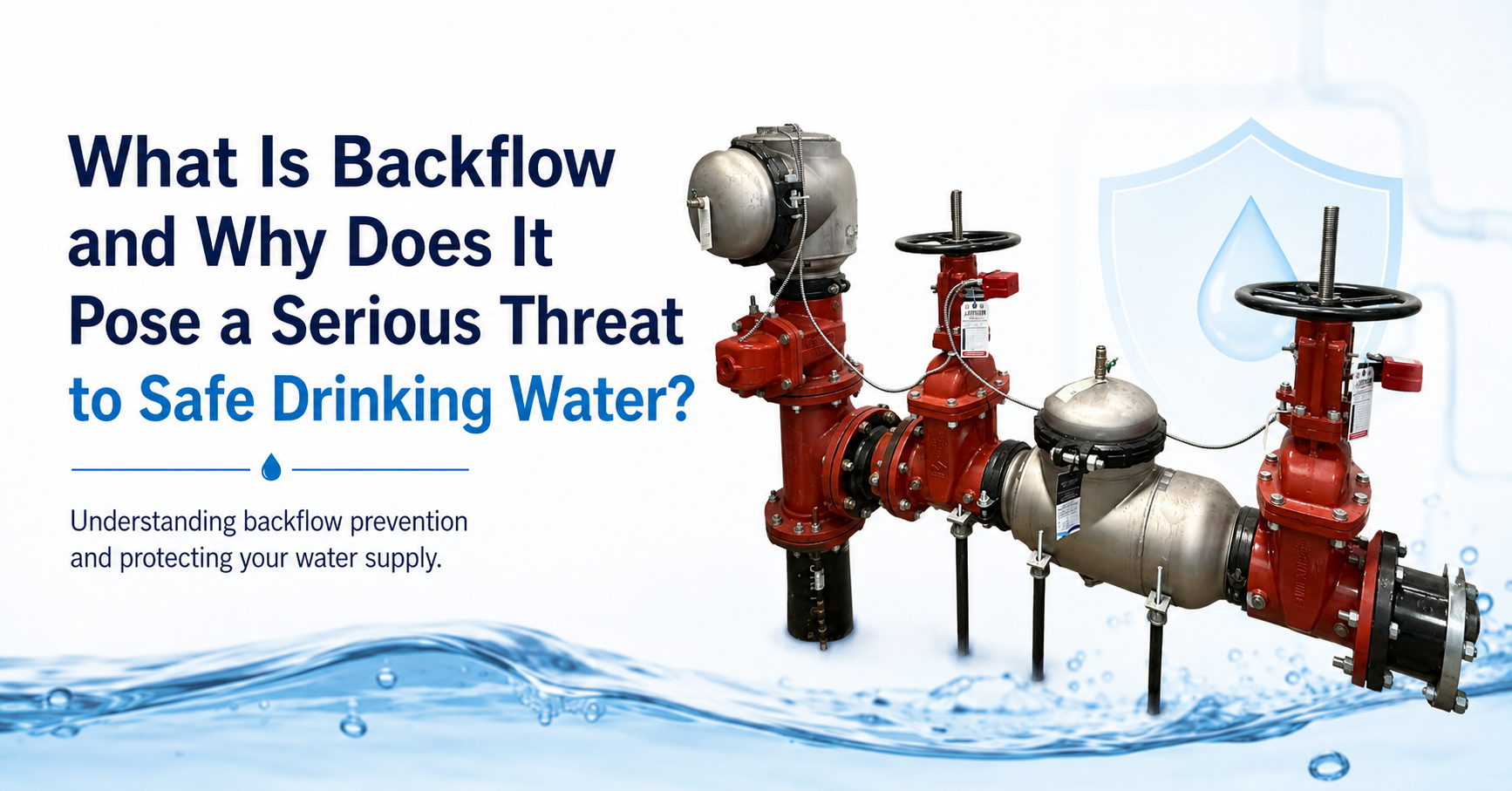
A backflow preventer is a device or assembly designed to prevent water from flowing back into the potable water supply.
The correct type of protection depends on several factors, including:
The type of property
The plumbing system design
The potential source of contamination
The level of hazard
Local municipal requirements
Applicable codes and standards
A backflow prevention device is not something that should be installed once and forgotten.
Like other mechanical equipment, it can wear out, become damaged, accumulate debris, or fail over time. Regular testing helps confirm that the device is operating as intended.
When a device fails a test, timely backflow repairs are important. A failed or malfunctioning device may no longer provide the protection the water system requires.
Is Annual Backflow Testing Required?
In many Ontario municipalities, including Kitchener and Waterloo, property owners with testable backflow prevention devices must have them tested annually.
Annual testing is not simply a maintenance recommendation. It is part of local backflow prevention bylaws designed to protect the public drinking water supply.
Municipal requirements can vary by city, property type, plumbing system, and backflow preventer type. Commercial, industrial, institutional, multi-residential, and properties with irrigation systems are commonly included in these programs.
A backflow preventer may look fine from the outside and still fail internally. Seals can wear, springs can weaken, debris can affect the check valves, and freezing or pressure changes can damage the assembly.
Annual testing confirms that the device is still working properly before it is needed during a backflow event.
If a device fails its test, backflow repairs or replacement should be completed promptly, and the required test documentation should be submitted or retained in accordance with the municipality's rules.
"We often speak with property owners who assume that because their backflow preventer passed last year, it will continue working indefinitely. These are mechanical devices, and they can fail without any visible warning. Annual testing helps protect the building, the municipal water system, and everyone who depends on that water.
— Darryl Schwindt, Owner/Operator, Transparent Backflow Services
Why Backflow Testing and Backflow Repairs Matter
Testing identifies problems that can compromise the potable water system. During a backflow inspection, a qualified technician tests the backflow device to verify that it is functioning correctly and complies with all regulatory standards. If the backflow device fails testing, the technician will determine whether it can be repaired or requires a full replacement.
Delaying repairs can leave a property exposed to contamination risks and may also create compliance issues under local backflow prevention programs.
Property owners and facility managers should take failed tests seriously, even when the water appears normal.
Backflow problems are often about what could happen during the next pressure change, not what is visible at the tap today.
Who Should Be Thinking About Backflow Prevention?
Backflow prevention is especially important for commercial, industrial, institutional, multi-residential, and residential properties with irrigation systems.
Common examples include:
Restaurants and food-service businesses
Manufacturing and industrial facilities
Medical, dental, and veterinary clinics
Apartment and condominium buildings
Schools and childcare centres
Irrigation systems
Fire protection systems
Properties with boilers or treatment equipment
Automotive, cleaning, and service businesses
Any property with a cross-connection between potable water and a possible source of contamination should be properly assessed.
Backflow Prevention Across Southern Ontario
Transparent Backflow Services is based in Waterloo and provides professional backflow prevention services across Southern Ontario.
The team supports property owners, facility managers, contractors, and businesses in:
Kitchener
Waterloo
Cambridge
Guelph
Woolwich
Centre Wellington
Stratford
Oxford County
Collingwood
Owen Sound
London
Hamilton
Grimsby
Welland
St Catharines
Windsor
Peel Region
Halton Region
Brantford
Toronto
Vaughan
Richmond Hill
Markham
Durham
Peterborough
Newmarket
Aurora
Barrie
Surrounding Southern Ontario communities
Services include:
Cross-connection surveys
Ongoing maintenance and compliance support
Every property is different. A restaurant, manufacturing facility, apartment building, and medical clinic may all have different plumbing systems and different levels of risk.
The right approach begins with understanding the property, identifying potential cross-connections, and ensuring the appropriate protection is in place.
Protecting Drinking Water Starts Before a Problem Occurs
Backflow prevention is easy to overlook because, when everything is working properly, nothing unusual happens.
That is exactly the point.
A properly installed and maintained backflow preventer works quietly in the background, helping stop contaminants from entering the drinking water supply when pressure conditions change.
The best time to address a backflow issue is before it results in a contamination event.
If your property requires annual backflow testing, has a device that failed inspection, needs a backflow installation, or requires a cross-connection survey. Transparent Backflow Services can help ensure your system is safe, reliable, and properly protected.
Contact Transparent Backflow Services for dependable backflow testing, repairs, installations, and surveys across Southern Ontario.