Back-Siphonage vs. Back-Pressure: Understanding the Two Primary Causes of Backflow
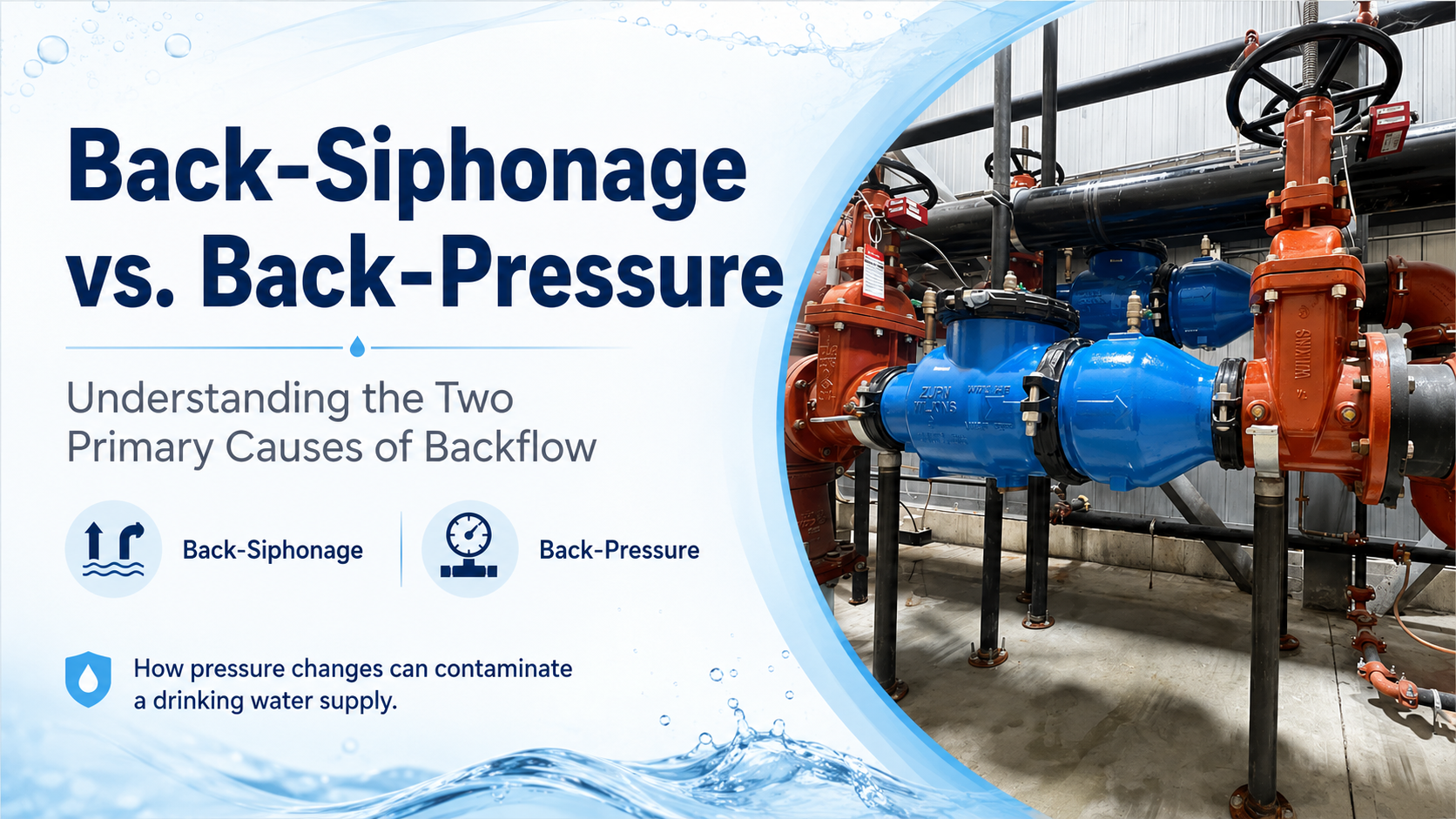
Backflow is one of those plumbing risks most people never think about until something goes wrong. Clean drinking water is expected to move in one direction: from the municipal supply into a building. Backflow occurs when the flow reverses, creating the possibility that non-potable water, chemicals, fire-suppression foam, fertilizers, bacteria, or other contaminants can be drawn or pushed back into the drinking water system.
For commercial, industrial, institutional, multi-residential, irrigation, and fire protection systems, this is not a small technical issue. It is a public health concern.
The two main causes of backflow are back-siphonage and back-pressure. They are often mentioned together, but they happen in very different ways. Understanding the difference is important for building owners, property managers, facility operators, and anyone responsible for backflow prevention, backflow testing, repairs, and installations in Kitchener, Waterloo, Cambridge, Guelph, and surrounding areas.
What Is Back-Siphonage?
Back-siphonage occurs when the pressure in the public water main drops below the pressure inside a building or a connected system. When that negative pressure occurs, it can act like a vacuum. Instead of water moving safely from the city supply into the property, water or other substances can be drawn backward into the potable water system.
Common causes of back-siphonage include water main breaks, fire hydrant use, hydrant flushing, high-demand events, water service shutdowns, improper hose connections, and maintenance work on municipal or private lines.
A simple garden hose can become a serious cross-connection if its end is submerged in a chemical tank, pool, bucket, irrigation system, or any non-potable source. If negative pressure develops, whatever the hose is sitting in can be siphoned back into the drinking water line.
One well-known incident in Pittsburgh shows how quickly this can become serious. A pesticide contractor was using a garden hose to fill a tank truck with termite-treatment chemicals. The hose was submerged in the chemical mixture. At the same time, a plumber cut into a nearby water main to install a gate valve. The draining water main created a back-siphonage condition, pulling pesticide from the tank into the water system serving 75 apartments. Residents were told not to use tap water and had to rely on trucked-in water for 27 days while the affected plumbing was addressed.
That is why backflow prevention is not just a plumbing formality. It is a safeguard between everyday building activity and the public drinking water supply.
What Is Back-Pressure?
Back-pressure is different. It happens when the pressure inside a private system exceeds the pressure in the municipal water supply. When that private-side pressure wins, it can push water, chemicals, or other substances backward into the potable system.
Back-pressure is commonly linked to booster pumps, fire pumps, boilers and heating systems, thermal expansion, industrial equipment, chemical injection systems, elevated tanks or piping, pressurized process water, and fire suppression systems.
Back-pressure can be especially important in commercial and industrial buildings because many systems operate at pressures higher than the municipal water supply. If those systems are connected to the potable water line without the proper backflow device, the risk is real.
Another Pittsburgh incident involved a warehouse fire in which two pumper trucks connected to hydrants generated enough pressure to overwhelm the drinking water lines. Fire-suppression foam was pushed into the municipal system, and residents reported soapy-looking water. The local water authority advised people in affected areas not to use the water until the system could be flushed.
The lesson is clear: backflow does not only happen in theory. It happens when pressure changes, cross-connections, and unprotected systems meet.
Why the Difference Matters
Back-siphonage draws contaminants into the water supply due to low or negative pressure. Back-pressure pushes contaminants into the water supply because the private-side pressure is too high.
The difference matters because the correct backflow prevention device depends on the hazard, the type of cross-connection, and the pressure conditions involved. A device that is acceptable for one situation may not be suitable for another.
For example, a low-risk hose connection may need a different form of protection than a fire suppression system, boiler system, irrigation system, medical facility, restaurant, manufacturing operation, or large multi-residential building. That is why proper assessment, installation, testing, and repairs should be handled by qualified backflow professionals.
Backflow Prevention in Kitchener-Waterloo
In Kitchener and Waterloo, backflow prevention requirements are especially important for commercial, industrial, institutional, large multi-residential, irrigation, and higher-risk systems. Property owners may be required to have proper devices installed, tested, maintained, and reported in accordance with municipal requirements.
For many buildings, annual backflow testing is part of staying compliant. Testing confirms that the device is working properly, that check valves are holding, that relief valves are operating correctly, and that the assembly can still protect the drinking water supply.
A backflow device is not a "set it and forget it" piece of equipment. Rubber seals wear down. Springs weaken. Debris can enter the assembly. Valves can stick. Pressure changes can expose problems. If a device fails testing, repairs or replacement may be needed before the system can be considered properly protected.
That is where experienced service matters.
Transparent Backflow provides backflow testing, backflow repairs, backflow installations, and cross-connection surveys for businesses and properties across Kitchener, Waterloo, Cambridge, Guelph, and nearby communities. The goal is simple: help property owners stay compliant while protecting the clean water everyone relies on.
What Building Owners Should Watch For
Property owners and managers should not wait until there is a failed inspection or notice from the municipality. Backflow protection should be reviewed when:
A new building is constructed
A plumbing system is changed
A boiler, irrigation, or fire system is added
A backflow device fails testing
A device has not been tested in the past year
A leaking or damaged backflow device is present
Business use changes and creates new potential water hazards
The municipality requests a cross-connection survey, test, or corrective action.
Backflow prevention is not just about passing a test. It is about knowing where the risks are and making sure the right device is installed in the right location.
Expert Quote
"Backflow protection is about prevention before there is a problem. Most building owners do not see what happens inside the water system, but pressure can change quickly during a main break, a fire event, a pump issue, or an equipment failure. Proper testing, repairs, and installations make sure the device is ready when it is needed most."
— Darryl Schwindt, Owner/Operator, Transparent Backflow Services
Protect Your Building and Your Water Supply
Back-siphonage and back-pressure are different problems, but they create the same risk: unwanted substances entering clean drinking water. One pulls contaminants backward through negative pressure. The other pushes them backward when the private-side pressure becomes too high.
Both risks can be prevented with the right backflow device, proper installation, certified backflow testing, and timely repairs.
For businesses and property owners in Kitchener, Waterloo, Cambridge, Guelph, and surrounding areas, backflow compliance is more than a municipal requirement. It is part of protecting your property, your tenants, your customers, and the wider community.
Transparent Backflow Services helps make that process simple. Whether you need annual backflow testing, a new installation, repairs after a failed test, a cross-connection survey or guidance on the right device for your property, our team can help you stay compliant and keep your water system protected.