Why Regular Backflow Testing and Certification Are Essential for Compliance and Safety
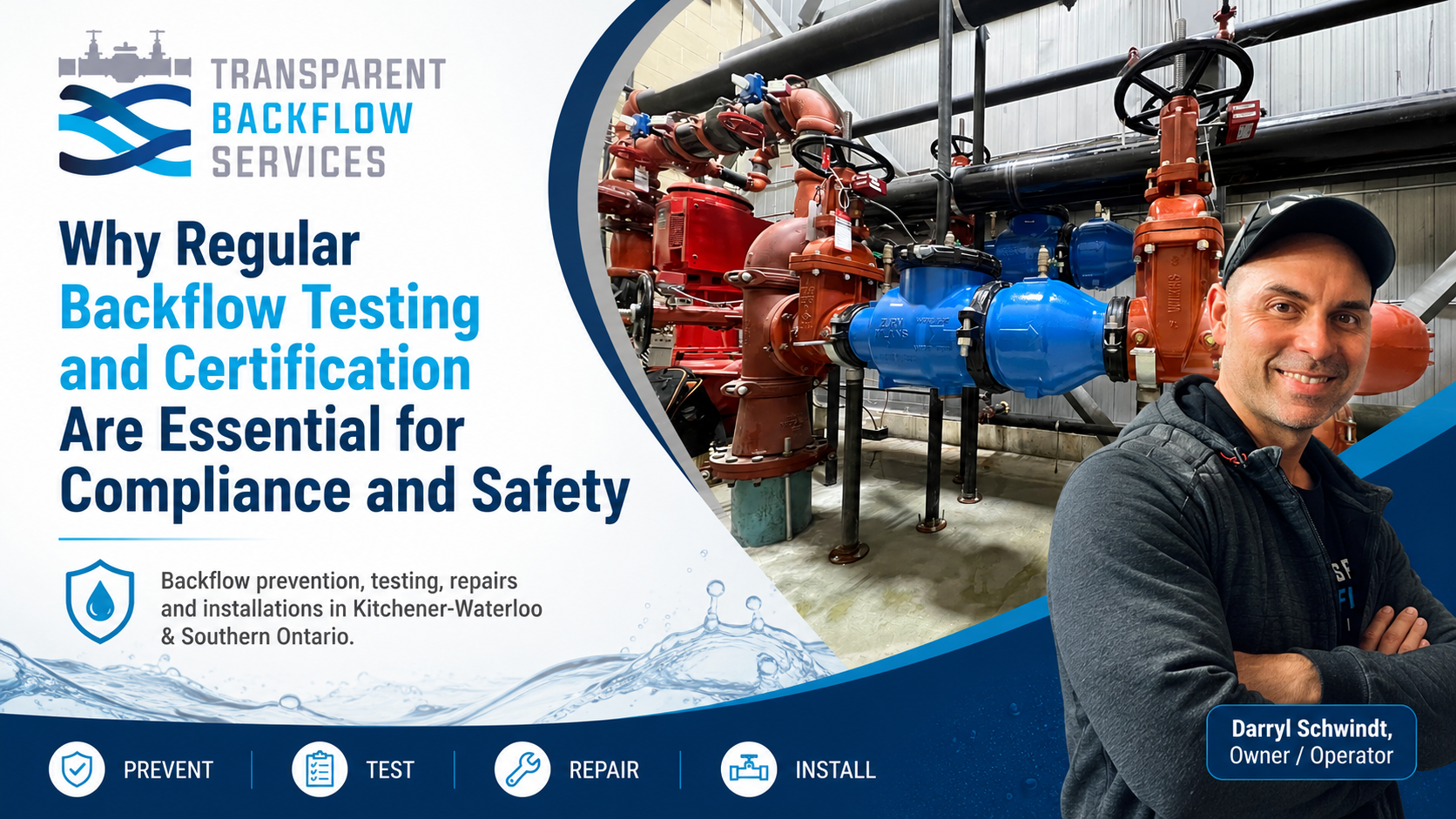
Most people do not think about backflow prevention until they receive a notice from the city, a device fails inspection, or a plumbing issue forces urgent attention. That is understandable. A backflow preventer is usually tucked away in a mechanical room, near a water meter, inside a fire protection room, on an irrigation line, or within a commercial plumbing system. It is not something customers see, tenants ask about, or staff members check every day.
But that hidden piece of equipment plays an important role.
A backflow prevention device protects the drinking water supply by preventing water from flowing backward and carrying contaminants back into the clean water system. For businesses, industrial properties, multi-residential buildings, medical offices, restaurants, irrigation systems, and fire protection systems, regular backflow testing is not just good maintenance. It is part of responsible building ownership and, in many cases, a compliance requirement.
Across Kitchener, Waterloo, Cambridge, Guelph, and Southern Ontario, property owners are expected to understand whether their building needs backflow protection, ensure the correct device is installed, and keep that device tested and maintained by certified professionals.
Backflow Devices Are Mechanical, Not Permanent Guarantees
A common mistake is assuming that once a backflow preventer is installed, the property is protected forever. In reality, backflow devices are mechanical assemblies. Like any mechanical system, they can wear down, collect debris, corrode, leak, or lose performance over time.
Within a testable backflow prevention device, components must operate under specific pressure conditions. Check valves must close tightly. Relief valves must open at the right pressure. Springs, seals, seats, discs, and internal moving parts must respond properly to pressure changes.
If those parts fail, the device may look fine from the outside while no longer doing its job on the inside.
That is why backflow testing matters. It confirms whether the device can still protect the potable water supply when needed.
What Backflow Testing Actually Checks
Backflow testing is more than a quick visual inspection. A certified tester uses calibrated testing equipment to measure how the device performs under controlled conditions. The goal is to verify that the assembly meets acceptable standards and can prevent reverse flow.
Depending on the type of device, the test may check whether:
The first check valve holds properly
The second check valve holds properly
The relief valve opens at the correct pressure
The device has no internal leakage
The shut-off valves are functional
The assembly is installed in a testable and accessible location
The device matches the hazard level of the system
The device is not damaged, bypassed, altered, or improperly isolated
This is important because a backflow preventer can fail in ways that are not obvious during everyday operation. A building may still have water pressure. Fixtures may still work. Staff may notice nothing unusual. But if internal components are not seating correctly, contamination pathways may exist.
Testing gives property owners proof that the device has been checked, documented, and either passed or identified for repair.
Why Devices Fail Over Time
Backflow prevention devices work in real plumbing environments, not laboratory conditions. Water systems carry minerals, sediment, rust, scale, and small debris. Pressure changes happen. Valves are opened and closed. Fire systems sit idle for long periods, then suddenly experience high demand. Irrigation systems are seasonal. Industrial and commercial systems may operate under varying pressure loads.
Common causes of backflow device failure include debris caught on a check valve, worn rubber seals, damaged seats, weak springs, corrosion, improper installation, freezing, water hammer, relief valve issues, leaking shut-off valves, or parts that have simply aged beyond reliable service.
This is why repairs and installations should never be treated as guesswork. If a device fails, the issue needs to be diagnosed properly. Sometimes the solution is cleaning and rebuilding. Sometimes internal parts need replacement. In other cases, the device may be incorrect for the application, poorly located, too old, or no longer worth repairing.
A certified professional can identify whether backflow repairs are practical or whether a new installation is the better long-term option.
Compliance Is a Property Owner's Responsibility
In municipalities like Kitchener and Waterloo, backflow prevention programs exist to protect the public water supply from cross-connections. These programs are especially important for properties where the risk is higher, such as commercial buildings, industrial facilities, institutional properties, multi-residential buildings, restaurants, medical and dental offices, automotive facilities, irrigation systems, and fire protection systems.
Property owners may be required to install approved backflow prevention devices, use qualified or approved contractors, complete testing, submit reports, and keep the device in proper working condition. Failing to test or repair a device can create more than a plumbing issue. It can lead to non-compliance, municipal notices, potential disruption, liability concerns, and avoidable emergency costs.
The key point is simple: backflow prevention is not only about having a device. It is about having the right device, in the right place, tested by the right person, with proper documentation submitted on time.
Certification Matters
Backflow testing should be performed by trained and certified professionals because the work requires technical expertise, appropriate equipment, and an understanding of applicable standards. A tester must know how different assemblies operate, how to interpret pressure readings, how to identify failed components, and how to complete the required documentation.
Certification also matters because municipalities need confidence that the person testing the device is qualified. Backflow prevention is directly connected to drinking water safety. It cannot be treated as a casual maintenance task.
For property owners, hiring a certified tester helps reduce risk. You get a proper test, clear results, and guidance if the device needs service. If repairs or installations are required, you also have someone who understands the system, the compliance process, and the practical realities of working in mechanical rooms, commercial buildings, industrial sites, fire protection rooms, and older properties.
Annual Testing Helps Prevent Bigger Problems
Annual backflow testing is often viewed as an administrative requirement, but it serves a practical purpose. A device that passed last year can fail this year. A system can change. A valve can begin leaking. Debris can interfere with a check valve. A repair elsewhere in the building can affect pressure. An irrigation or fire system can sit idle long enough for issues to develop unnoticed.
Regular testing catches problems early.
That matters because the cost of scheduled testing is usually far lower than the cost of emergency repairs, failed compliance, water shutdowns, tenant disruption, or a contamination event. For property managers, annual testing also creates a record. It shows that the building is being maintained, that public water protection is being taken seriously, and that the owner is not waiting for problems to become urgent.
Backflow Testing for Kitchener-Waterloo and Southern Ontario Properties
Buildings across Kitchener-Waterloo and Southern Ontario have different backflow risks depending on their use. A restaurant has different concerns than a warehouse. A dental office is different from a manufacturing facility. A fire protection system is different from an irrigation system. A multi-unit building is different from a small retail property.
That is why backflow prevention should be site-specific. The right approach depends on the building, the plumbing layout, the hazard level, the connected equipment, and the municipal requirements.
Transparent Backflow Services works with property owners, contractors, facility managers, and businesses that need backflow prevention, testing, installation, and repair services across Kitchener, Waterloo, Cambridge, Guelph, and Southern Ontario. Whether the job involves annual testing, a failed device, a new installation, a replacement, or a cross-connection survey, the goal is to make the process simple and compliant.
Expert Quote
"Backflow testing is one of those things that can seem routine, but it is there for a very important reason. These devices protect the clean water system, and they need to be tested by someone who understands how they work. A device can look fine on the outside and still fail internally. Regular testing helps catch those issues before they become bigger problems for the building owner or the public water supply."
— Darryl Schwindt, Owner/Operator, Transparent Backflow Services
Keep Your Property Protected and Compliant
Backflow prevention is not just a box to check. It is a safeguard for your building, your tenants, your staff, your customers, and the public drinking water system.
If your property has a backflow prevention device, it needs to be tested regularly. If it fails, it needs to be repaired properly. If your building does not have the right protection in place, it may need a new installation. And if you are unsure what your property requires, it is better to find out before a notice, failed inspection, or emergency situation forces the issue.
Transparent Backflow Services provides certified backflow testing, backflow repairs, backflow installations and cross-connection surveys across Kitchener-Waterloo and Southern Ontario.
Protect your property. Stay compliant. Keep your water system safe.