Backflow Incident Costs vs. Prevention in Guelph, Ontario
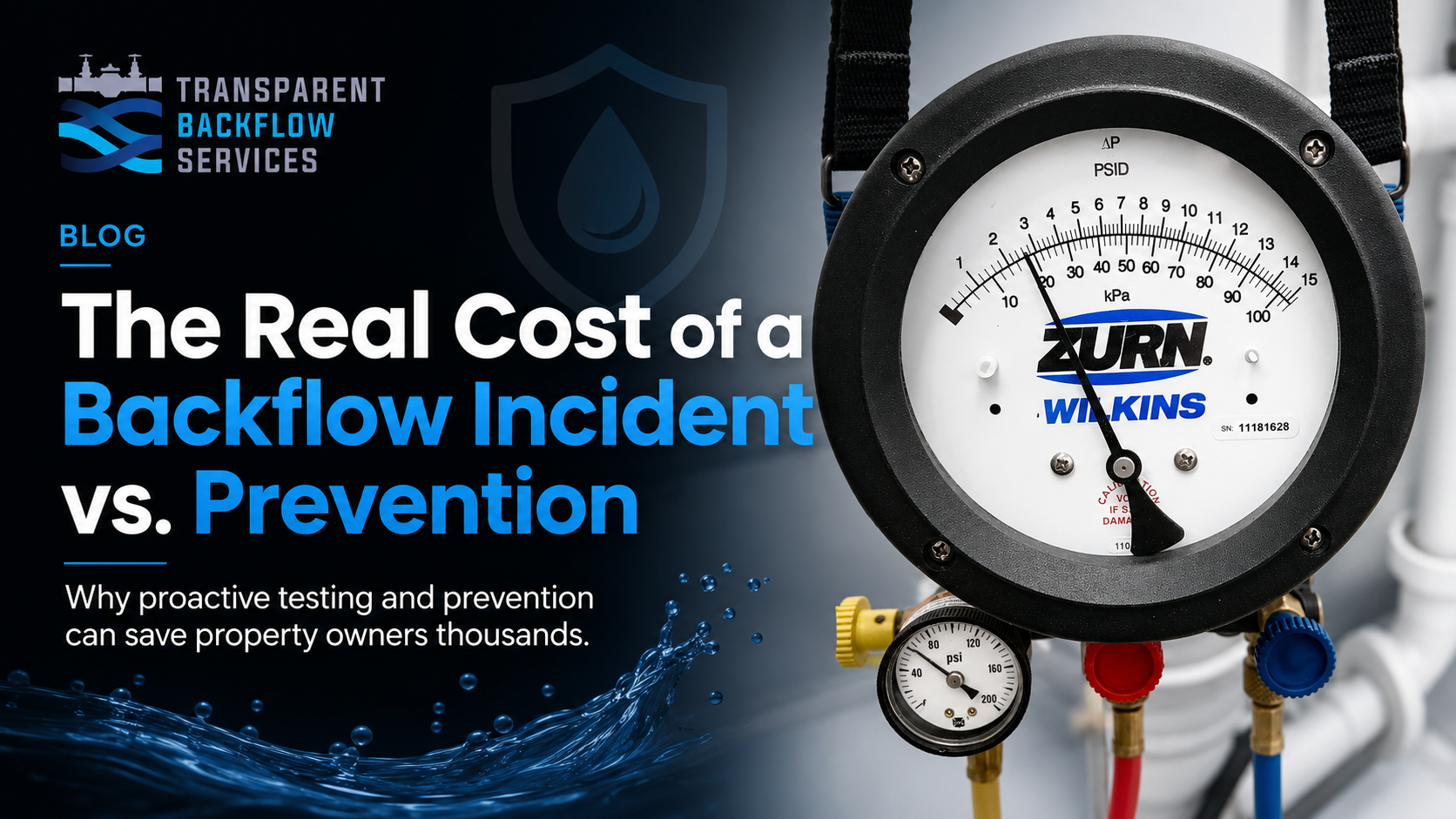
Comparing the True Cost of Incidents vs. Proactive Protection
For many Guelph property owners, backflow prevention can feel like another routine maintenance expense.
A testing reminder arrives. A cross-connection survey needs to be completed. A device fails and requires repair. A renovation creates the need for a new backflow prevention device.
It is understandable to focus on the immediate cost of completing the work.
However, the more important comparison is not between paying for backflow testing and doing nothing. It is between the predictable cost of prevention and the potentially much greater cost of contaminated water, emergency plumbing work, business interruption, and regulatory involvement.
For commercial, industrial, institutional, and multi-residential properties in Guelph, backflow prevention protects more than one building. It helps protect employees, customers, residents, and the municipal drinking-water system.
“A scheduled backflow test or repair is a controlled expense. A contamination incident is not. Once there is a concern about the water, the property owner may be dealing with emergency plumbing work, water testing, interrupted operations, and questions from employees, tenants, or customers. Preventive work helps identify problems while they are still manageable.”
Darryl Schwindt
Owner/Operator, Transparent Backflow Services
What Is a Backflow Incident?
Water in a properly functioning plumbing system should travel in one direction: from the municipal water supply into the property.
Backflow happens when water reverses direction.
This can occur through back-siphonage, when pressure in the municipal supply drops, or through back pressure, when pressure inside a building becomes greater than the pressure in the potable-water system.
A watermain break, firefighting activity, pump, boiler, irrigation system, or other pressure change may create the conditions for backflow. If an unprotected cross-connection is present, chemicals, detergents, wastewater, or other contaminants may enter drinking-water piping.
The City of Guelph describes a cross-connection as an actual or likely connection between a potable-water system and a source of pollution or contamination. The City’s Backflow Prevention Program is intended to identify these connections and help prevent contaminants from entering the drinking-water supply.
Backflow Has Had Real Consequences in Guelph
Backflow is not simply a theoretical plumbing risk. Incidents have previously occurred in Guelph.
The 1997 Guelph Drinking-Water Incident
The Region of Durham’s Backflow Prevention Program cites a 1997 incident in which petroleum chemicals were back-siphoned from an industrial property into Guelph’s drinking-water system.
The incident reportedly affected approximately 50,000 residents.
A final public dollar figure for the incident is not readily available. However, a water-quality event affecting such a large number of people can involve far more than the original plumbing problem.
Potential costs may include:
Emergency investigation and water sampling
Flushing affected water lines
Temporary restrictions on water use
Bottled-water distribution
Business interruption
Municipal emergency response
Plumbing repairs and updates
Public communication
Insurance or legal expenses
Loss of customer confidence
The 1997 event remains an important example of why backflow prevention and premise isolation are taken seriously in Guelph.
What Can a Backflow Incident Cost a Property Owner?
The cost of a backflow incident is rarely limited to replacing one device.
Lost Business and Operating Time
A water-quality concern can interrupt normal operations immediately.
A restaurant may be unable to prepare food. A dental or medical office may need to postpone appointments. A manufacturing facility may have to pause production. A multi-residential building may need to arrange temporary water access for tenants.
Even a short interruption can affect:
Revenue
Employee productivity
Appointments and reservations
Production schedules
Deliveries
Tenant relationships
Customer confidence
The impact becomes greater when the source of the problem cannot be identified quickly.
Emergency Investigation
Unexpected water contamination may require several parties to become involved.
The investigation could include:
Inspecting the plumbing system
Testing backflow prevention devices
Tracing cross-connections
Isolating equipment
Collecting water samples
Reviewing recent plumbing changes
Working with municipal staff
Emergency work is also more difficult to plan and schedule than regular backflow maintenance.
Flushing and Corrective Plumbing Work
If contamination is suspected, affected piping may need to be isolated, flushed, cleaned, or disinfected.
Corrective work may also include:
Backflow repairs or device replacement
Permit applications and inspections
Plumbing modifications
Removal of improper connections
Installation of additional backflow devices
Follow-up testing
A relatively small defect can become a larger project if contaminated water has traveled throughout the building.
Compliance and Documentation
Property owners may be required to provide test reports, survey documents, plumbing records, permits, or evidence that failed equipment has been corrected.
The City of Guelph requires backflow test reports to be submitted within 14 days of testing. If a device fails, the City directs the property owner to have it repaired or replaced immediately.
Failure to complete the required work can create additional administrative pressure while the business is already trying to resolve the physical problem.
Reputation Damage
Customers may not understand the difference between an internal plumbing issue and contamination of the municipal water supply.
They may only hear that there was a problem with the water.
For restaurants, healthcare providers, food-processing facilities, residential properties, and other public-facing organizations, rebuilding confidence can take much longer than repairing the plumbing.
The Cost of Proactive Backflow Protection
Prevention usually involves planned, controlled, and documented expenses.
Cross-Connection Control Surveys in Guelph
A cross-connection control survey examines a property’s plumbing system to identify actual or potential connections between potable water and possible sources of contamination. The City of Guelph requires its survey form to be completed by a qualified plumber who is registered with the municipality.
A professional backflow survey may identify:
Unprotected equipment
Missing backflow devices
Incorrectly selected devices
Undocumented plumbing changes
Improper bypasses
Inaccessible testing points
Missing premise or source isolation
Devices that no longer match the property’s hazard level
The cost of a scheduled survey is predictable. Finding the same problems during a contamination investigation is not.
Backflow Testing in Guelph
The City of Guelph generally requires testable backflow prevention devices to be tested when they are first installed and annually thereafter.
Testing is also required when a device is repaired, or relocated. Devices installed on irrigation and fire-sprinkler systems are included in the City’s testing requirements.
Professional backflow testing ensures the device is operating as intended. A device may look fine from the outside and still fail testing.
Regular testing gives the property owner an opportunity to correct the problem before the device is needed during an actual pressure change.
Planned Backflow Repairs
A failed test does not always mean the entire backflow assembly needs to be replaced.
Depending on the device’s age, condition, and availability of parts, a qualified backflow specialist may be able to:
Flush and clean the assembly
Remove debris from the assembly
Replace worn o-rings or rubber components
Repair or replace check valves
Repair or replace the relief valve
Once the assembly is reassembled, the device is tested to ensure it is operating correctly
Completing a backflow repair quickly can prevent a manageable mechanical problem from becoming a larger compliance or water-quality concern.
Proper Backflow Installation
New equipment, renovations, and changes in building use can create new cross-connections.
The correct device must be selected based on the degree of hazard, the plumbing arrangement, and the type of isolation required by the local municipality.
The City of Guelph’s backflow bylaw requires devices to be installed according to manufacturer specifications and applicable CSA requirements. Premise-isolation devices are generally required to be located within three metres downstream of the water meter unless another arrangement is approved by the City.
A permit may be required when:
A new backflow device is installed
A replacement device is a different type
The size of the device changes
A device is relocated
The purpose of the device changes
A correctly selected and installed device provides far greater protection than a device chosen simply because it fits the existing pipe.
Backflow Incident Costs vs. Prevention Costs
Scheduled backflow testing
Emergency investigation
Planned cross-connection survey
Unexpected business interruption
Predictable repair work
Urgent plumbing and corrective work
Proper device installation
Removal of improper connections
Current reports and records
Regulatory and documentation pressure
Work completed at a suitable time
Work completed during an emergency
Problems identified early
Contamination may already have occured
Controlled expense
Potentially open-ended expense
The difference is not simply the cost of a backflow test.
It is the difference between controlling the timing and scope of the work and responding after control has already been lost.
Why Backflow Surveys Matter After Renovations
Plumbing systems rarely remain unchanged throughout the life of a property.
A building may add:
A commercial dishwasher
Chemical dispensing equipment
A boiler
An irrigation system
Fire-suppression equipment
Dental or medical equipment
A production line
A water-treatment system
A new tenant
Temporary water feeds or wash stations
Each change can affect the property’s cross-connection risk.
When Should You Contact a Backflow Specialist in Guelph?
Property owners should arrange expert help when:
An annual testing notice is received
A cross-connection survey is required
A device fails its test
A backflow device is leaking or discharging
New equipment is being installed
Plumbing renovations are planned
The building’s use or occupancy changes
Water looks, smells, or tastes unusual
Existing records are incomplete
A device is being moved or replaced
The property has changed ownership or tenants
Addressing the issue early is usually easier than correcting undocumented plumbing work after an inspection or water-quality incident.
Backflow Testing, Surveys, Repairs and Installations in Guelph
Transparent Backflow Services helps commercial, industrial, institutional, and multi-residential property owners manage their backflow prevention responsibilities in Guelph and throughout Southern Ontario.
Our services include:
Cross-connection surveys
Backflow prevention device repairs
New backflow installations
Replacement device installations
Testing after repairs or relocation
Device troubleshooting
Assistance with reports and documentation
Our goal is to detect potential risks, confirm that existing devices are working properly, and carry out necessary corrective work before a manageable issue becomes an emergency.
Prevention Is Less Disruptive Than Recovery
A backflow test, repair, or survey has a defined purpose and a manageable scope. A contamination incident does not.
Guelph’s previous incidents demonstrate how a plumbing problem can affect an individual building or extend into the wider drinking-water system.
Proactive backflow prevention helps property owners:
Protect clean drinking water
Reduce business interruption
Maintain municipal compliance
Identify problems sooner
Plan repairs and installations properly
Keep testing and survey records current
Reduce the risk of emergency corrective work
The true value of prevention is not only what the service costs today.
It is what that service may prevent tomorrow.
Schedule Backflow Service in Guelph
For professional backflow testing, cross-connection surveys, repairs, or installations in Guelph, contact Transparent Backflow Services.
Certified expertise. Reliable service. Practical support for protecting clean water.